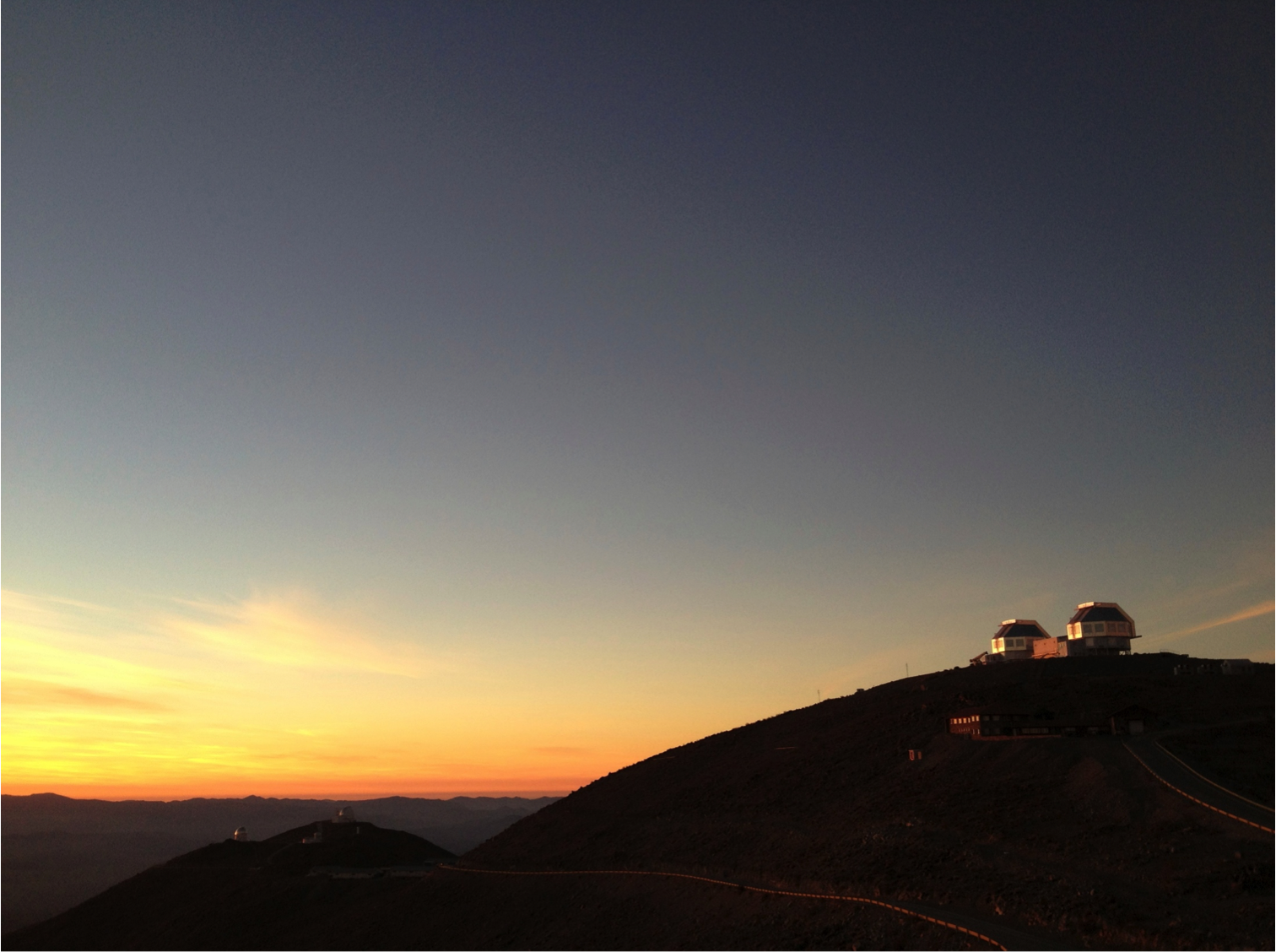
Renu Malhotra – LPL Professor and EOS Team Member – has recently given an excellent TEDx talk on the Search for Planet 9. The talk is now available online – check it...
Atmospheric characterization of transiting exoplanets Previous posts on this blog have discussed different methods for detecting exoplanets, including my favorite, the transit method. Transiting exoplanets, which pass directly in front of their host stars as seen from...
There are many ways astronomers have developed to detect exoplanets. Mikayla Mace introduced the most popular methods—radial velocity, transit, and direct imaging—in an earlier post on this blog. Each of these has their own strengths, making them useful for detecting...
I sat down on my third flight of the day, and the last that I would be taking to the big island of Hawaii on my way to the Mauna Kea observatories. The passenger with the seat adjacent to mine followed and sat down. My step-mom was a flight attendant, so flying is...
The current estimate for the number of stars with Earth-sized planets orbiting in the habitable zone is about one in four, according to Dr. Daniel Apai Principal Investigator for Project EOS. Other researchers estimates range from as few as 5 percent to more than 100...
A closer look at dust particles dating service ukraine Young planet-forming disks contain trillions of tiny microscopic dust particles. Even in the tenuous protoplanetary disk, these particles bump into each other every now and then, sticking together and growing...
“Usually the first thing you find in astronomy are the freaks,” said Dr. Travis Barman, Project EOS co-investigator and associate professor at the University of Arizona. “And the freaks tell you about the exceptions not the rule.” Exoplanets are illusive objects. They...
How do planets form? This is a question that scientists have asked themselves for centuries. Kant (in 1755) and Laplace (in 1796) postulated the nebular hypothesis, which states that the solar system planets formed from a rotating disk of material. Over the years...
A strange and new extrasolar system was discovered by graduate research fellow and Project EOS collaborator Kevin Wagner, principal investigator for Project EOS Daniel Apai, and assistant professor of astronomy at the University of Arizona Kaitlin Kratter, announced...
Discovering Earth 2.0, another planet like our Earth that could host life on its surface, requires us to characterize the atmosphere of the planet. An important feature we need to study is the clouds in that atmosphere. What are they made of? How are they...